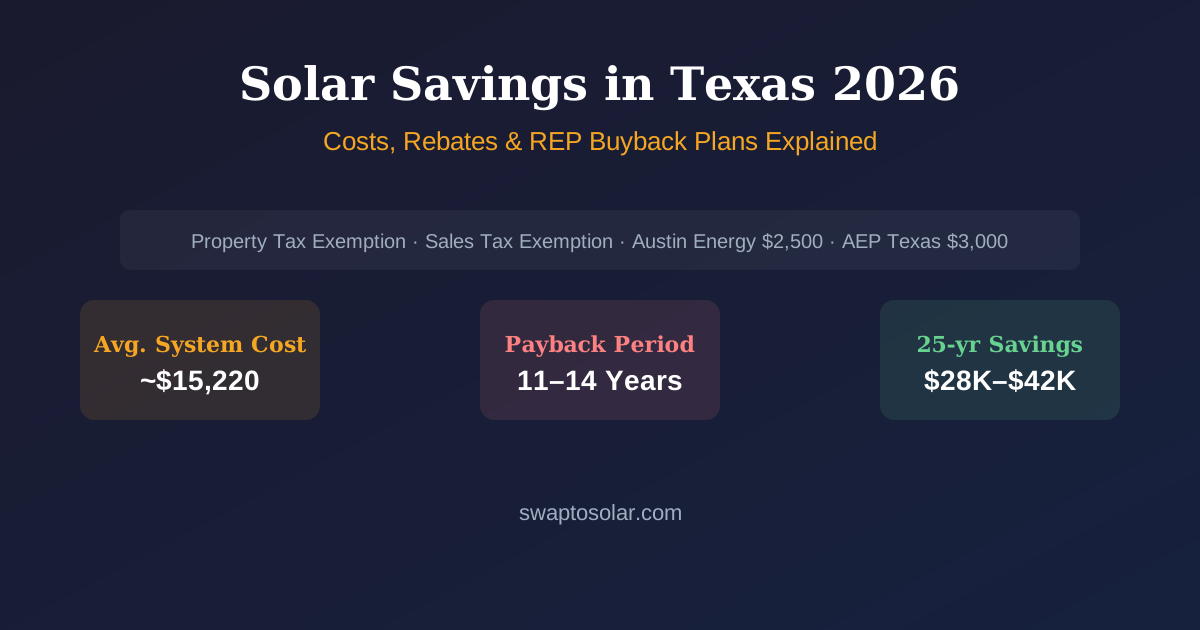
Texas is one of the largest solar markets in the US — and for good reason. Despite having no state income tax credit and losing the federal ITC at the end of 2025, Texas homeowners benefit from a 100% property tax exemption, some of the country’s most competitive installer prices, and a deregulated electricity market where you can choose a solar-friendly Retail Electricity Provider (REP).
Use our Solar Savings Calculator to get an instant estimate based on your Texas ZIP code and monthly electricity bill.
Texas Solar at a Glance (2026)
| Factor | Texas 2026 |
|---|---|
| Avg. electricity rate | ~$0.13/kWh |
| Avg. 7 kW system cost | ~$18,900 |
| Federal ITC | ❌ Expired Dec 31, 2025 |
| State income tax credit | ❌ None (no state income tax) |
| Property tax exemption | ✅ 100% on added solar value |
| Sales tax exemption | ✅ Yes |
| Net metering (statewide) | ❌ Not mandated — varies by REP |
| Austin Energy rebate | ✅ $2,500 (eligible customers) |
| AEP Texas rebate | ✅ Up to $3,000 |
| Avg. payback period | 11–14 years |
What Solar Incentives Are Available in Texas in 2026?
The federal 30% residential ITC (Section 25D) expired December 31, 2025 — see our full ITC status guide for details. Texas has no state income tax, so a state solar tax credit isn’t possible. But several strong incentives remain:
1. Property Tax Exemption — Texas Tax Code §11.27
This is Texas’s most impactful solar incentive. Under Texas Tax Code §11.27, the added home value from a solar installation is 100% exempt from property taxes.
- Solar typically adds 3–4% to Texas home resale values (per Zillow Research)
- On a $350,000 home, that’s ~$10,500–$14,000 in added value — which would otherwise be taxed at local property tax rates (averaging ~2.0–2.5% in Texas)
- Annual savings: ~$210–$350/year in avoided property taxes
- How to claim: File Form 50-123 (Exemption Application for Solar or Wind-Powered Energy Devices) with your county appraisal district by April 30 of the tax year
This exemption compounds over 20+ years and is one of the cleanest financial benefits in the Texas solar incentive stack.
2. Sales Tax Exemption
Solar energy devices are exempt from Texas state sales tax (6.25%) under Texas Tax Code §151.317. Local sales taxes (up to 2%) may also be exempt depending on your municipality. On an $18,900 system, the state portion saves you approximately $1,180.
3. Austin Energy Rebate
Austin Energy customers qualify for a $2,500 rebate on solar installations:
- Must be an Austin Energy residential customer
- System must be installed by a licensed contractor
- Apply through Austin Energy before installation — approval is required first
- Check austinenergy.com for current program availability and waitlist status
4. AEP Texas Rebate
AEP Texas offers rebates up to $3,000 for eligible residential solar customers in its service territory (West Texas and parts of South Texas):
- Rebate amount: varies by system size
- Check aeptexas.com directly for current program status — these programs open and close based on available funding
5. Choosing a Solar-Friendly REP (Critical in Texas)
Texas has a deregulated electricity market in most areas (served by ERCOT). This means you choose your Retail Electricity Provider — and your choice dramatically affects your solar ROI.
Unlike regulated states with standard net metering, Texas REPs set their own solar buyback rates:
| REP Solar Buyback Type | What You Get |
|---|---|
| Full retail buyback | Credits at your full rate (~$0.13/kWh) |
| Partial buyback | Credits at 70–90% of retail rate |
| Wholesale/avoided cost | Credits at ~$0.03–$0.06/kWh |
| No buyback | No credit for exported power |
REPs known for favorable solar buyback plans (verify current terms before signing):
- Green Mountain Energy — solar-specific plans with buyback
- Reliant Energy — solar buyback options
- TXU Energy — solar plans available
- Rhythm Energy — solar-focused plans
Action item: Before installing solar, research current REP solar buyback plans at PowerToChoose.org — the official Texas PUC comparison tool. Switch to a solar-friendly REP at the same time you go solar.
Texas Solar Savings Example (2026)
For a Texas homeowner with a $150/month electricity bill ($1,800/year):
| Amount | |
|---|---|
| 7 kW system gross cost | $18,900 |
| Sales tax exemption (~6.25%) | −$1,180 |
| AEP/Austin Energy rebate (if eligible) | −$2,500 |
| Estimated net cost | $15,220–$17,720 |
| Annual electricity savings | ~$1,100–$1,400 |
| Property tax exemption (annual) | ~$250/year ongoing |
| Payback period | 11–14 years |
| 25-year net savings | ~$28,000–$42,000 |
Estimates based on 7 kW system producing ~10,500 kWh/year at Texas’s average 5.5 peak sun hours. Actual results vary by city, roof orientation, and REP buyback rate.
Get your free Texas solar estimate → Use our Solar Calculator
Texas Electricity Rates and Solar ROI
Texas’s average rate of ~$0.13/kWh is below the national average (~$0.16/kWh) — which is the primary reason Texas payback periods run longer than states like New Jersey or Massachusetts despite more sun.
However, Texas rates are volatile. ERCOT grid events (like Winter Storm Uri in 2021) have pushed many homeowners toward solar + battery storage for grid independence. The financial case for battery backup in Texas is driven more by energy security than rate savings alone.
Texas cities and their solar potential:
| City | Avg. Peak Sun Hours/Day | Notes |
|---|---|---|
| El Paso | 6.5 | Best in Texas — one of the sunniest US cities |
| Dallas | 5.4 | Strong production, competitive installer market |
| Houston | 5.2 | High humidity reduces efficiency slightly |
| San Antonio | 5.5 | CPS Energy territory — check their programs |
| Austin | 5.4 | Austin Energy rebate available |
| Amarillo | 5.7 | High wind too — consider wind+solar |
Use NREL’s PVWatts Calculator for a production estimate at your specific address.
CPS Energy (San Antonio) — A Special Case
San Antonio is served by CPS Energy, a municipally owned utility that is not part of the deregulated ERCOT market. CPS Energy has its own solar program:
- SolarHost: CPS Energy installs and owns rooftop panels; you get a bill credit
- Residential solar interconnection: standard net metering-style crediting available
- Rebates: CPS Energy has offered solar rebates historically — check cpsenergy.com for current programs
If you’re in San Antonio, the REP-switching strategy doesn’t apply. You work directly with CPS Energy.
Solar + Battery Storage in Texas: Post-Uri Demand
Since Winter Storm Uri (February 2021), demand for solar + battery storage has surged in Texas. The financial case is different from standard solar:
- Battery storage is not just about savings — it’s about keeping your home powered during ERCOT grid failures
- Federal ITC for residential batteries expired December 31, 2025 — no 30% credit for batteries added in 2026
- Some REPs offer demand response programs that pay battery owners to discharge during peak grid stress events — ask your REP
For Texans in areas prone to outages, the peace-of-mind value of battery backup is real and difficult to quantify purely in dollars.
Is Solar Worth It in Texas Without the Federal ITC?
For the right homeowner, yes — especially:
- Austin Energy customers: $2,500 rebate cuts cost significantly
- AEP Texas customers: up to $3,000 rebate available
- High electricity consumers: $200+/month bills shorten payback considerably
- El Paso and West Texas: exceptional sun hours improve production and ROI
- Homeowners choosing full-retail REP buyback plans: maximizes the value of exported power
Where Texas solar is harder to justify in 2026:
- Low electricity bills (<$75/month)
- Utilities or REPs with poor solar buyback rates
- Shaded roofs or predominant east/west orientation
- Plans to sell within 5 years (though property tax exemption + resale value help)
How to Get an Accurate Texas Solar Quote
Your actual savings depend on:
- Your city and ZIP code — sun hours vary from El Paso (6.5/day) to Houston (5.2/day)
- Your REP and buyback rate — this is the biggest variable in Texas
- Your utility — ERCOT vs. CPS Energy vs. AEP Texas vs. Austin Energy have different programs
- Your roof — south-facing unshaded roofs produce 15–20% more than east/west-facing
Get quotes from 3+ installers and ensure they clarify which REP buyback plan they’re recommending. Prices vary 20–30% between installers in Texas.
Start with a free estimate → Solar Calculator
Key Takeaways
- Property tax exemption (Form 50-123) is Texas’s most impactful long-term incentive — file by April 30 with your county
- Sales tax exemption saves ~$1,180 on a typical 7 kW system — automatic
- Utility rebates: Austin Energy ($2,500) and AEP Texas (up to $3,000) are the best available
- REP buyback rate is critical — compare solar plans at PowerToChoose.org before signing a contract
- Federal ITC expired December 31, 2025 — no 30% credit for 2026 installations
- Avg. payback: 11–14 years; 25-year savings: $28,000–$42,000 depending on REP and city
- El Paso has the best solar production in Texas at 6.5 peak sun hours/day
Related Articles
- Solar Savings Calculator by State 2026: Texas, Michigan & New Jersey
- Has the Federal Solar Tax Credit Expired? 2026 ITC Status Update
- Best States for Solar Energy in 2026: Top 10 Ranked
- How Much Do Solar Panels Cost in 2026? State-by-State Guide
- How to Switch to Solar: A Step-by-Step Guide for Homeowners
- Solar Savings Calculator
Sources: Texas Tax Code §11.27, Austin Energy Solar, AEP Texas, PowerToChoose.org, NREL PVWatts, DSIRE Texas Incentives, EIA Texas Electricity Profile, EnergySage Texas Solar.