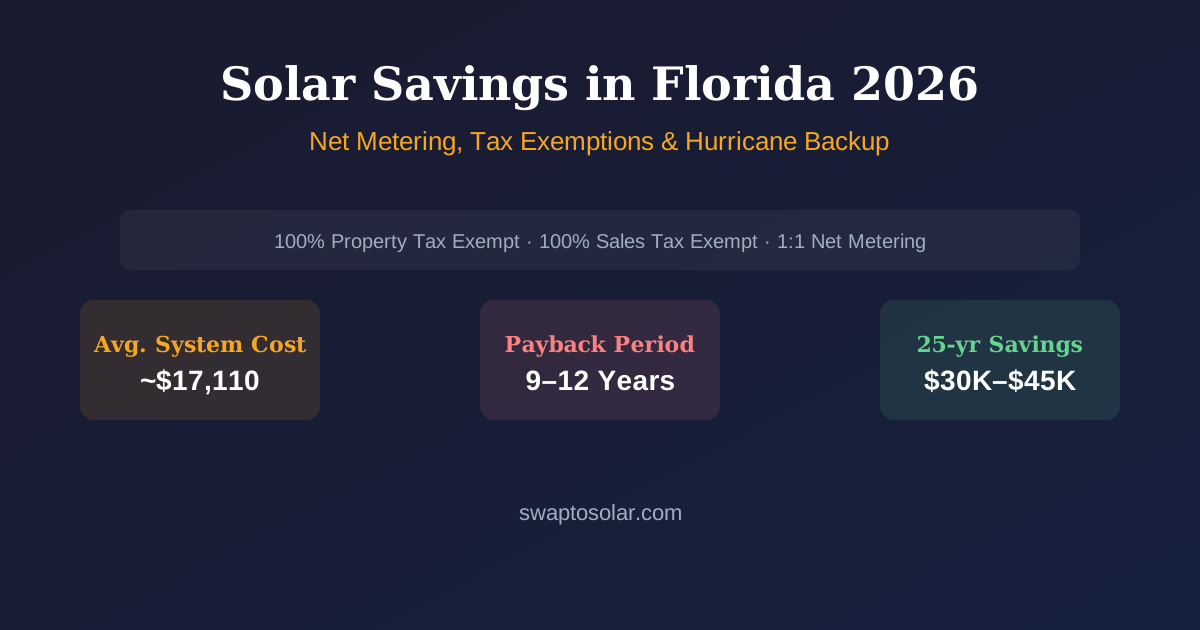
Florida — the Sunshine State — is one of the most natural places in America to go solar, and it remains a strong market in 2026 even after the federal ITC expired. Florida combines abundant sunlight, no state income tax, a 100% property tax exemption, a 100% sales tax exemption, and statewide net metering. Add frequent hurricanes that make battery backup genuinely valuable, and the case for Florida solar is compelling.
Use our Solar Savings Calculator to get an instant estimate based on your Florida ZIP code and monthly electricity bill.
Florida Solar at a Glance (2026)
| Factor | Florida 2026 |
|---|---|
| Avg. electricity rate | ~$0.145/kWh |
| Avg. 7 kW system cost | ~$18,200 |
| Federal ITC | ❌ Expired Dec 31, 2025 |
| State income tax credit | ❌ None (no state income tax) |
| Property tax exemption | ✅ 100% on added solar value |
| Sales tax exemption | ✅ 100% (6% saved) |
| Net metering (statewide) | ✅ 1:1 retail credit (rule preserved) |
| Avg. peak sun hours | 5.3–5.7/day |
| Avg. payback period | 9–12 years |
What Solar Incentives Are Available in Florida in 2026?
The federal 30% residential ITC (Section 25D) expired December 31, 2025 — see our full ITC status guide. Florida has no state income tax, so a state tax credit isn’t possible, but two automatic exemptions and statewide net metering deliver real value:
1. Solar Property Tax Exemption (100%)
Under Florida’s Property Tax Abatement for Renewable Energy Property, the added home value from a residential solar installation is 100% exempt from property taxes.
- Solar adds roughly 3–4% to Florida home values (per Zillow Research)
- On a $400,000 home, that’s ~$12,000–$16,000 in added value, fully shielded from property tax
- Estimated savings: ~$120–$200/year in avoided property taxes
- The exemption is automatic for residential installations — no application required in most counties
2. Sales Tax Exemption (100%)
Solar energy systems are 100% exempt from Florida’s 6% state sales tax. On an $18,200 system, that’s roughly $1,090 saved automatically at purchase.
3. Statewide Net Metering (1:1 Retail Credit)
Florida law preserves net metering at the full retail rate for the major investor-owned utilities (FPL, Duke Energy Florida, TECO). Excess solar you export earns a credit at roughly your retail rate (~$0.145/kWh), which offsets the power you pull from the grid at night.
- Credits roll over month to month
- At year-end, any remaining credit is typically trued up at the utility’s avoided-cost rate
- Net metering is the backbone of Florida solar ROI — confirm your utility’s current tariff before signing
4. Utility & Local Programs
Some municipal utilities (e.g., JEA in Jacksonville, OUC in Orlando, Lakeland Electric) run their own solar and battery programs that differ from the big investor-owned utilities. Always check your specific provider.
Florida Solar Savings Example (2026)
For a Florida homeowner with a $160/month electricity bill ($1,920/year):
| Amount | |
|---|---|
| 7 kW system gross cost | $18,200 |
| Sales tax exemption (6%) | −$1,090 |
| Estimated net cost | ~$17,110 |
| Annual electricity savings | ~$1,500–$1,800 |
| Property tax exemption (annual) | ~$150/year ongoing |
| Payback period | 9–12 years |
| 25-year net savings | ~$30,000–$45,000 |
Estimates based on a 7 kW system producing ~11,200 kWh/year at Florida’s ~5.5 peak sun hours with 1:1 net metering. Actual results vary by utility and roof orientation.
Get your free Florida solar estimate → Use our Solar Calculator
Florida Electricity Rates and Solar ROI
Florida’s average rate of ~$0.145/kWh is close to the national average. Payback periods run a bit longer than ultra-high-rate states like California or Massachusetts, but Florida’s strong sunlight and high air-conditioning loads (big summer bills) mean systems produce a lot and offset expensive peak usage.
Florida cities and their solar potential:
| City | Avg. Peak Sun Hours/Day | Notes |
|---|---|---|
| Miami | 5.6 | High AC load year-round, strong production |
| Tampa | 5.5 | TECO territory, competitive installer market |
| Orlando | 5.4 | OUC (municipal) has its own programs |
| Jacksonville | 5.3 | JEA (municipal) — check separate rules |
| Fort Myers | 5.6 | Excellent sun, hurricane-prone (battery value) |
| Tallahassee | 5.2 | Municipal utility territory |
Use NREL’s PVWatts Calculator for a production estimate at your specific address.
Hurricanes & Battery Backup: A Florida-Specific Case
Florida’s hurricane season makes solar + battery storage especially valuable here — not purely for savings, but for resilience:
- A grid-tied solar system without a battery shuts off during an outage for safety reasons. Only solar paired with a battery (and the right inverter) keeps your home powered when the grid is down.
- Hurricanes Ian, Idalia, and others left millions without power for days — battery backup turns your roof into a personal power source
- Federal ITC for batteries expired December 31, 2025 — no 30% credit for storage added in 2026
- Look for systems rated for island mode / whole-home or partial-home backup
For many Florida homeowners, the resilience value of storage is worth more than the pure dollar savings.
Is Solar Worth It in Florida Without the Federal ITC?
For most Florida homeowners, yes — especially:
- High AC users with $150+/month summer bills
- Homeowners who value hurricane resilience and add battery backup
- South and Central Florida with 5.5+ peak sun hours
- Anyone keeping their home long-term — net metering plus tax exemptions compound over 25 years
Where Florida solar is harder to justify in 2026:
- Low bills (<$90/month)
- Shaded lots (common with mature tree canopy)
- HOA restrictions (though Florida law strongly protects homeowners’ right to install solar)
- Plans to move within a few years
Note: Florida’s “Solar Rights” law (§163.04) limits HOAs from prohibiting solar installations — an HOA generally cannot ban panels outright.
How to Get an Accurate Florida Solar Quote
Your actual savings depend on:
- Your utility — FPL, Duke, and TECO net metering differ from municipal utilities (JEA, OUC, Lakeland)
- Your roof orientation and shading — south-facing unshaded roofs produce the most
- Whether you add storage — strongly worth modeling for hurricane resilience
- Your summer usage — high AC bills shorten payback
Get quotes from 3+ licensed installers. Florida prices vary 20–30% between companies, and post-storm demand spikes can affect pricing and scheduling.
Start with a free estimate → Solar Calculator
Key Takeaways
- 100% property tax exemption + 100% sales tax exemption are automatic and save ~$1,090+ upfront plus ongoing property tax savings
- Statewide 1:1 net metering (FPL, Duke, TECO) is the backbone of Florida solar ROI
- Battery backup is uniquely valuable in hurricane-prone Florida — for resilience as much as savings
- No state income tax means no state tax credit, but the exemptions and sun more than compensate
- Federal ITC expired December 31, 2025 — no 30% credit for 2026 installations
- Avg. payback: 9–12 years; 25-year savings: $30,000–$45,000
- Florida’s “Solar Rights” law protects your right to install panels despite HOA pushback
Related Articles
- Solar Savings Calculator by State 2026: Texas, Michigan & New Jersey
- Has the Federal Solar Tax Credit Expired? 2026 ITC Status Update
- Best States for Solar Energy in 2026: Top 10 Ranked
- How Much Do Solar Panels Cost in 2026? State-by-State Guide
- Solar Savings Calculator
Sources: Florida Statutes §196.175 (Property Tax Exemption), Florida Solar Rights §163.04, Florida PSC Net Metering, NREL PVWatts, DSIRE Florida Incentives, EIA Florida Electricity Profile.