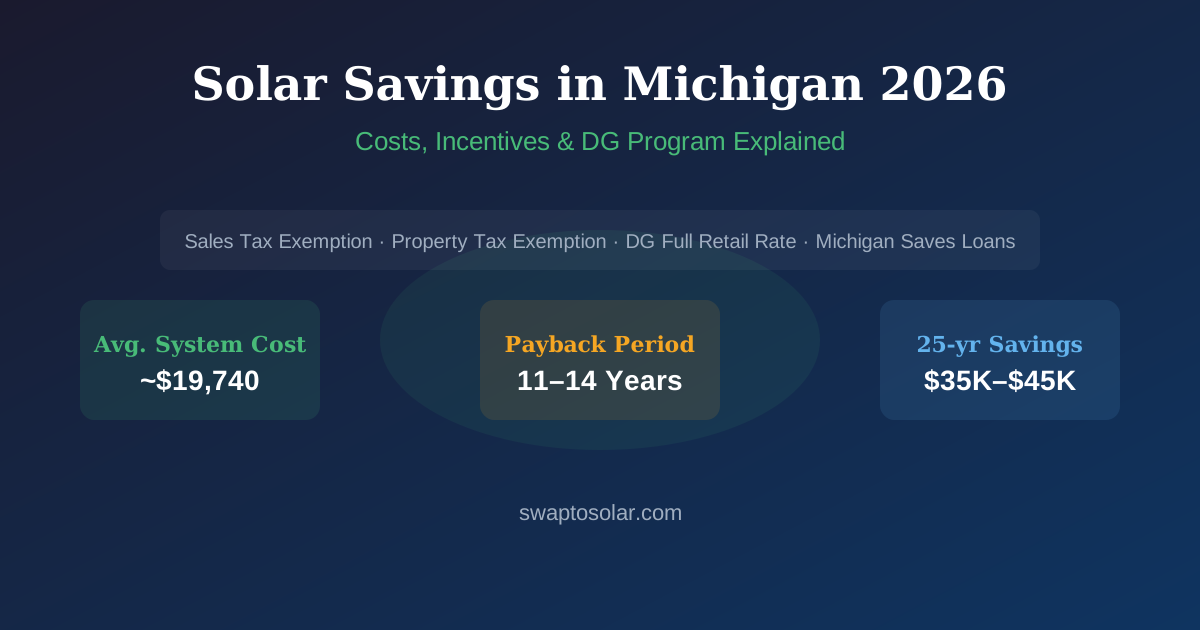
Michigan homeowners have a compelling solar case in 2026 — despite losing the federal 30% ITC at the end of 2025. Between the state’s Distributed Generation (DG) program, sales tax exemption, property tax exemption, and rising electricity rates, payback periods run 11–14 years for most Michigan households.
Use our Solar Savings Calculator to get an instant estimate based on your Michigan ZIP code and monthly electricity bill.
Michigan Solar at a Glance (2026)
| Factor | Michigan 2026 |
|---|---|
| Avg. electricity rate | ~$0.18/kWh |
| Avg. 7 kW system cost | ~$21,000 |
| Federal ITC | ❌ Expired Dec 31, 2025 |
| State income tax credit | ❌ None |
| Sales tax exemption | ✅ Yes (6% MI sales tax) |
| Property tax exemption | ✅ Yes (systems ≤150 kW) |
| Net metering / DG program | ✅ Full retail rate (<20 kW) |
| Michigan Saves loans | ✅ 4.44–7.90% APR, up to $50K |
| Avg. payback period | 11–14 years |
What Solar Incentives Are Available in Michigan in 2026?
The federal residential ITC (Section 25D) expired December 31, 2025 — see our full ITC status guide for details. Michigan doesn’t have a state solar income tax credit either. But several other incentives significantly reduce your net cost:
1. Sales Tax Exemption
Michigan exempts solar energy equipment from the 6% state sales tax. On a $21,000 system, that saves you approximately $1,260 off the top — automatically applied at the point of purchase. No application required.
2. Property Tax Exemption
Under Michigan law, solar energy systems are exempt from property tax assessment for systems up to 150 kW (residential systems are typically 5–15 kW). This means:
- Your home’s assessed value does not increase when you install solar
- You pay no additional property taxes, even though solar typically adds 3–4% to home resale value
- The exemption is automatic — no filing required in most Michigan counties
3. Distributed Generation (DG) Program — Michigan’s Net Metering Equivalent
Michigan replaced traditional net metering with the Distributed Generation (DG) Program, which functions similarly for most residential homeowners:
- Systems 20 kW or smaller receive full retail-rate credits for excess electricity exported to the grid
- Credits roll forward to the next billing period
- Applies to Consumers Energy and DTE Energy customers (the two major Michigan utilities)
- Rate: whatever you pay per kWh for grid electricity — approximately $0.18/kWh
Why this matters: Full retail-rate crediting dramatically improves solar ROI. You’re effectively “banking” excess summer solar production to offset higher winter grid usage. This makes Michigan’s DG program significantly better than states that credit at wholesale/avoided-cost rates.
Important: The DG program is available through Consumers Energy and DTE Energy. If you’re served by a municipal utility or cooperative, contact them directly about their net metering policy.
4. Michigan Saves Green Bank Loans
Michigan Saves offers low-interest financing specifically for home energy improvements, including solar:
- APR: 4.44–7.90% (varies by credit score and loan term)
- Loan amounts: up to $50,000
- Terms: up to 15 years
- No home equity required: it’s an unsecured home improvement loan
- Application: through Michigan Saves–approved lenders
For homeowners who want solar but prefer not to pay cash upfront, Michigan Saves financing is one of the best options in the country for solar loans.
5. Lansing Board of Water & Light Rebate
If you’re a Lansing BWL customer, you qualify for a rebate of $500/kW installed, up to $2,000 for residential systems:
- A typical 4 kW system: $2,000 rebate (maximum)
- Applied after installation — installer typically handles the paperwork
- Check lbwl.com for current program availability
6. Consumers Energy & DTE Rebates
Both Consumers Energy and DTE Energy have offered periodic solar rebates and incentive programs. These change frequently — check directly with your utility before installation to see what’s currently available.
Michigan Solar Savings Example (2026)
For a Michigan homeowner with a $150/month electricity bill ($1,800/year):
| Amount | |
|---|---|
| 7 kW system gross cost | $21,000 |
| Sales tax exemption (6%) | −$1,260 |
| Property tax exemption | Ongoing (no increase) |
| Lansing BWL rebate (if eligible) | −$2,000 |
| Estimated net cost | $17,740–$19,740 |
| Annual electricity savings (DG at $0.18/kWh) | ~$1,400–$1,600 |
| Payback period | 11–14 years |
| 25-year net savings | ~$35,000–$45,000 |
Estimates based on 7 kW system producing ~8,400 kWh/year at Michigan’s average 4.0 peak sun hours. Actual production varies by roof orientation, shading, and ZIP code. Use NREL PVWatts for location-specific sun data.
Get your free Michigan solar estimate → Use our Solar Calculator
Michigan Electricity Rates and Solar ROI
Michigan’s average residential electricity rate of $0.18/kWh is above the national average (~$0.16/kWh), which improves solar ROI compared to low-rate states. And Michigan rates have increased approximately 3–4% per year over the past decade, driven by:
- Grid infrastructure upgrades
- Renewable portfolio standard (RPS) compliance costs
- Aging coal plant retirements and replacement capacity
Every 10% increase in electricity rates improves your solar payback by roughly 6–8 months. If rates continue rising at the historical pace, 25-year savings estimates could be significantly higher than the static projections above.
How Much Sun Does Michigan Get?
Michigan’s location in the upper Midwest means fewer annual sun hours than Sun Belt states — but it’s still sufficient for solar to be financially viable:
| City | Avg. Peak Sun Hours/Day |
|---|---|
| Detroit | 4.1 |
| Grand Rapids | 4.0 |
| Lansing | 3.9 |
| Traverse City | 3.8 |
| Upper Peninsula | 3.5–3.7 |
For comparison, Texas averages 5.5–6.0, and New Jersey averages 4.2–4.5. Michigan produces less power per panel — but the full retail-rate DG credits and rising electricity costs compensate.
Use NREL’s PVWatts Calculator to get a precise production estimate for your specific address.
Consumers Energy vs. DTE Energy: Solar Policy Differences
Both major Michigan utilities participate in the DG program, but there are some differences:
| Consumers Energy | DTE Energy | |
|---|---|---|
| DG program | ✅ Yes | ✅ Yes |
| Credit rate | Full retail | Full retail |
| Max system size (DG) | 20 kW | 20 kW |
| Monthly fixed charge | ~$10/month | ~$10/month |
| Additional solar rebates | Periodic — check current offers | Periodic — check current offers |
For either utility, systems under 20 kW (virtually all residential installs) get full retail-rate crediting. The economics are essentially identical between the two utilities.
Is Solar Worth It in Michigan Without the Federal ITC?
For most Michigan homeowners, yes — with the right setup.
Where Michigan solar works best:
- High electricity consumers ($150+/month bills)
- South-facing roofs with minimal shading
- Consumers Energy or DTE Energy customers (reliable DG access)
- Lansing BWL customers (extra $2,000 rebate)
- Homeowners using Michigan Saves financing (keeps upfront cost low)
Where it’s harder to justify:
- Very low electricity bills (<$75/month) — smaller systems, longer payback
- Heavily shaded roofs or east/west-only orientation
- Plans to sell the home within 5 years (though solar does increase resale value)
The removal of the federal ITC adds roughly 2–3 years to payback compared to pre-2026 calculations. But with electricity rates projected to keep rising, the 25-year savings case remains strong.
How to Get an Accurate Michigan Solar Quote
The estimates in this article are based on state averages. Your actual numbers depend on:
- Your specific ZIP code — sun hours vary from Detroit to the Upper Peninsula
- Your roof — orientation, pitch, shading, and available square footage
- Your electricity rate — Consumers Energy, DTE, and municipal utilities have different rates and tier structures
- Which rebates you qualify for — Lansing BWL customers have an advantage; other Consumers/DTE customers should ask about current programs
Best approach: Get quotes from 3+ local installers and compare. Prices can vary 20–30% between companies. Use our calculator for a baseline, then get firm quotes.
Start with a free estimate → Solar Calculator
Key Takeaways
- Michigan’s sales tax exemption saves ~$1,260 on a typical 7 kW system — automatic, no application needed
- The DG program credits excess solar at full retail rate for systems under 20 kW — one of Michigan’s best solar benefits
- Property tax exemption means no property tax increase even though solar raises home value
- Michigan Saves loans at 4.44–7.90% APR make solar accessible without upfront cash
- Federal ITC expired December 31, 2025 — no 30% federal credit for 2026 installations
- Avg. payback: 11–14 years; 25-year savings estimate: $35,000–$45,000
- Check with your installer about current Consumers Energy and DTE rebate programs
Related Articles
- Solar Savings Calculator by State 2026: Texas, Michigan & New Jersey
- Has the Federal Solar Tax Credit Expired? 2026 ITC Status Update
- Best States for Solar Energy in 2026: Top 10 Ranked
- How Much Do Solar Panels Cost in 2026? State-by-State Guide
- How to Switch to Solar: A Step-by-Step Guide for Homeowners
- Solar Savings Calculator
Sources: Michigan Saves, Lansing BWL Solar Rebate, DSIRE Michigan Incentives, NREL PVWatts Calculator, EIA Michigan Electricity Profile, EnergySage Michigan Solar.